How to prepare an Islamic book for print: Arabic, references and layout
A practical checklist for authors and publishers: getting the Arabic right, writing references readers can check, grading reports, and the files a printer needs.
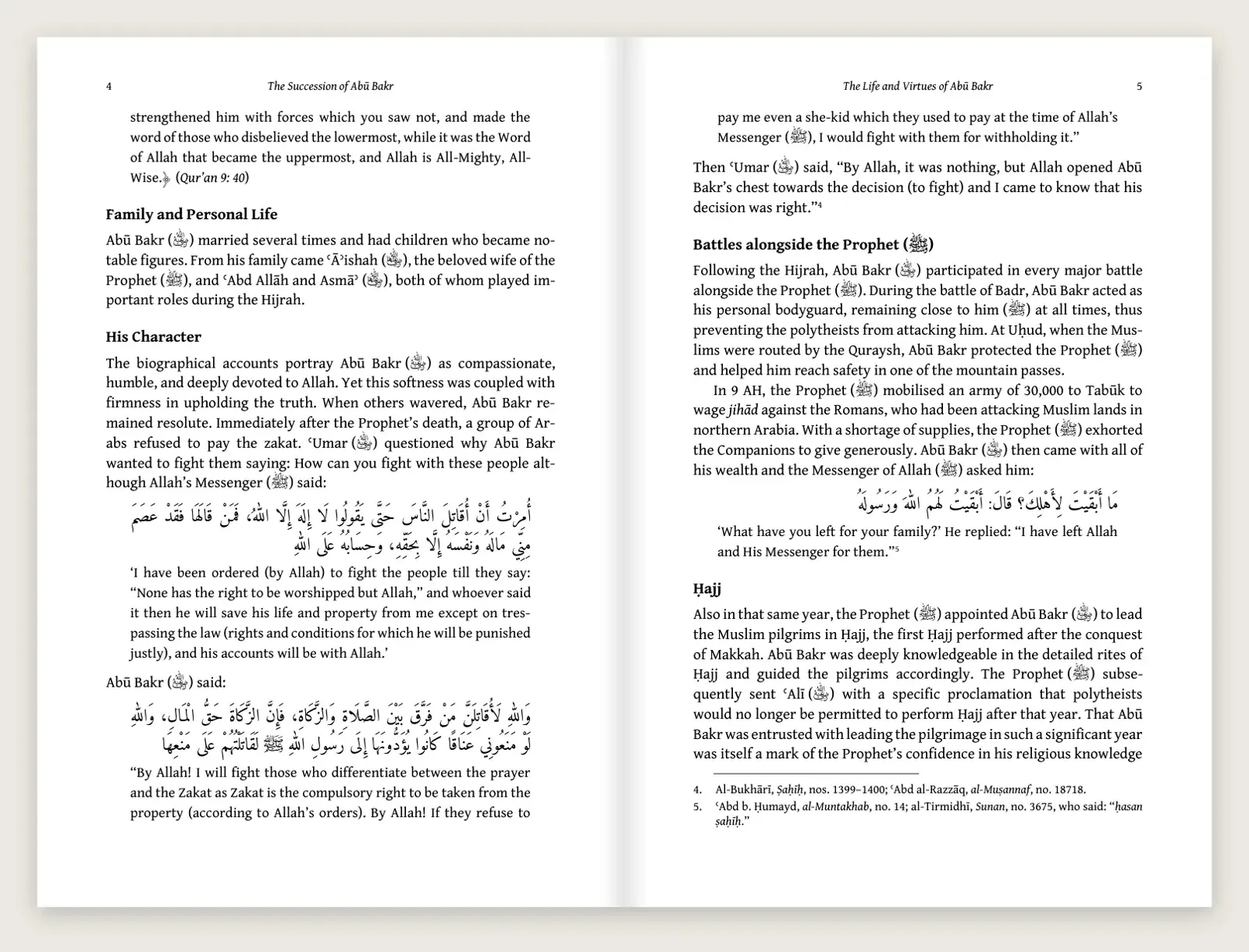
A book that quotes the Qur’an and hadith is judged on details most readers notice straight away: a missing vowel in a verse, a reference that leads nowhere, a grading copied from somewhere without a reason. This guide is the checklist we work through when we prepare books like these for print, whether they are written in English, Arabic or Urdu.
1. Get the Arabic from the sources
If your book translates verses and reports, readers who know Arabic will want to see the original, and readers who don’t will trust the book more when it is there. Two rules make the difference:
- Take every passage from the source itself. Copy Qur’an verses from a reliable Mushaf text and reports from the book you cite, not from memory, a forum or a social media image. Keep a simple log: the passage, the book, the volume and page or number, and the edition.
- Give only the wording that matters. For hadith and reports, the key sentence in Arabic is usually enough. A full chain in Arabic above every English paragraph slows an English reader down without telling them more.
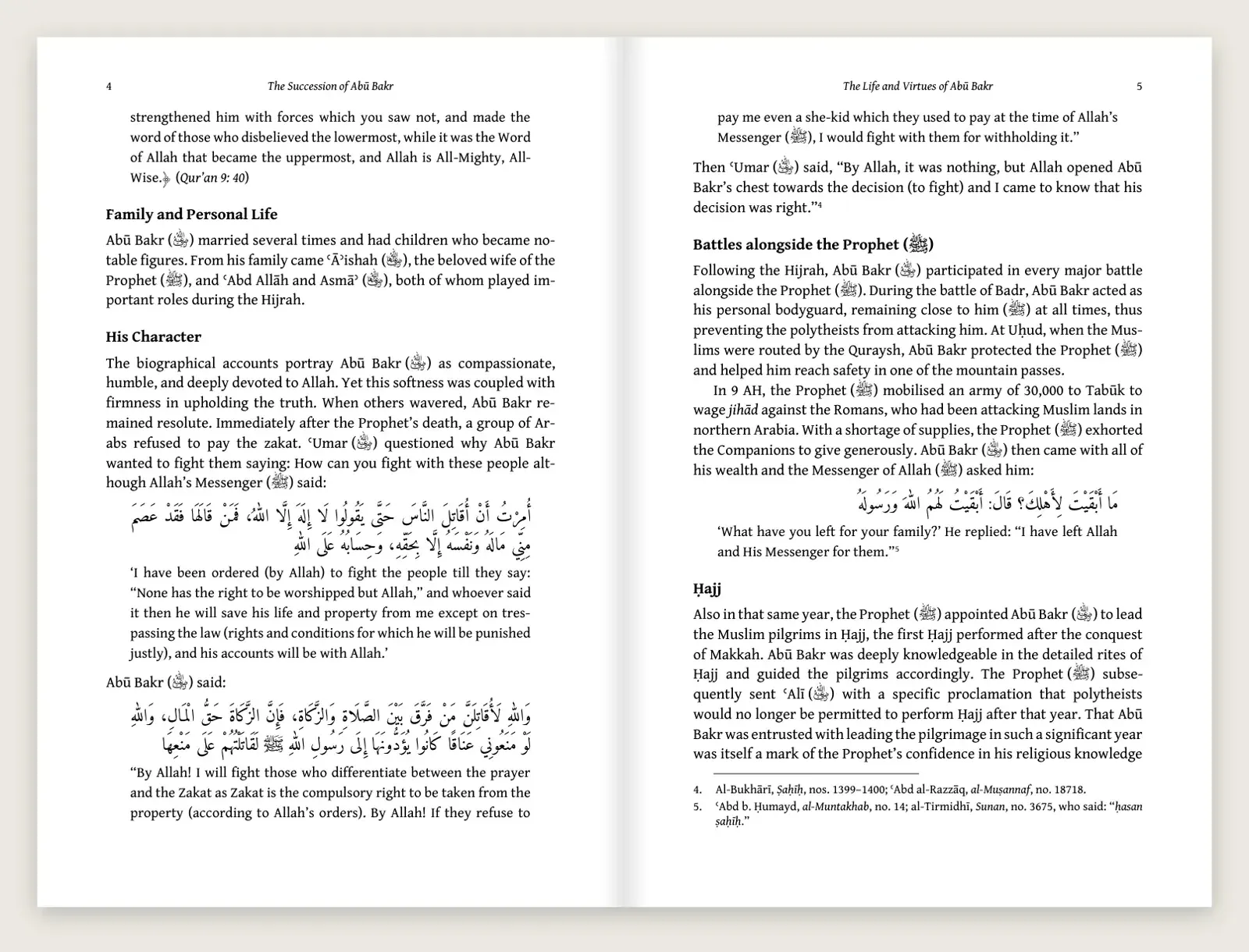
Place each Arabic passage directly above, or beside, the translation it belongs to, so nobody has to guess which English goes with which Arabic.
2. Write references a reader can follow
“Narrated by Muslim” or “reported in the Musnad” is not a reference. A reader should be able to open the book and find the passage. That means:
- the book’s name, then the volume and page, or the hadith number;
- the edition you used, especially when numbering differs between editions;
- the earliest source that records the report, not only a later book that quotes it.
When you cannot confirm a reference, don’t guess. Mark it and come back to it, or ask someone to check it. A wrong page number does more harm than an honest gap.
3. Grade reports with reasons
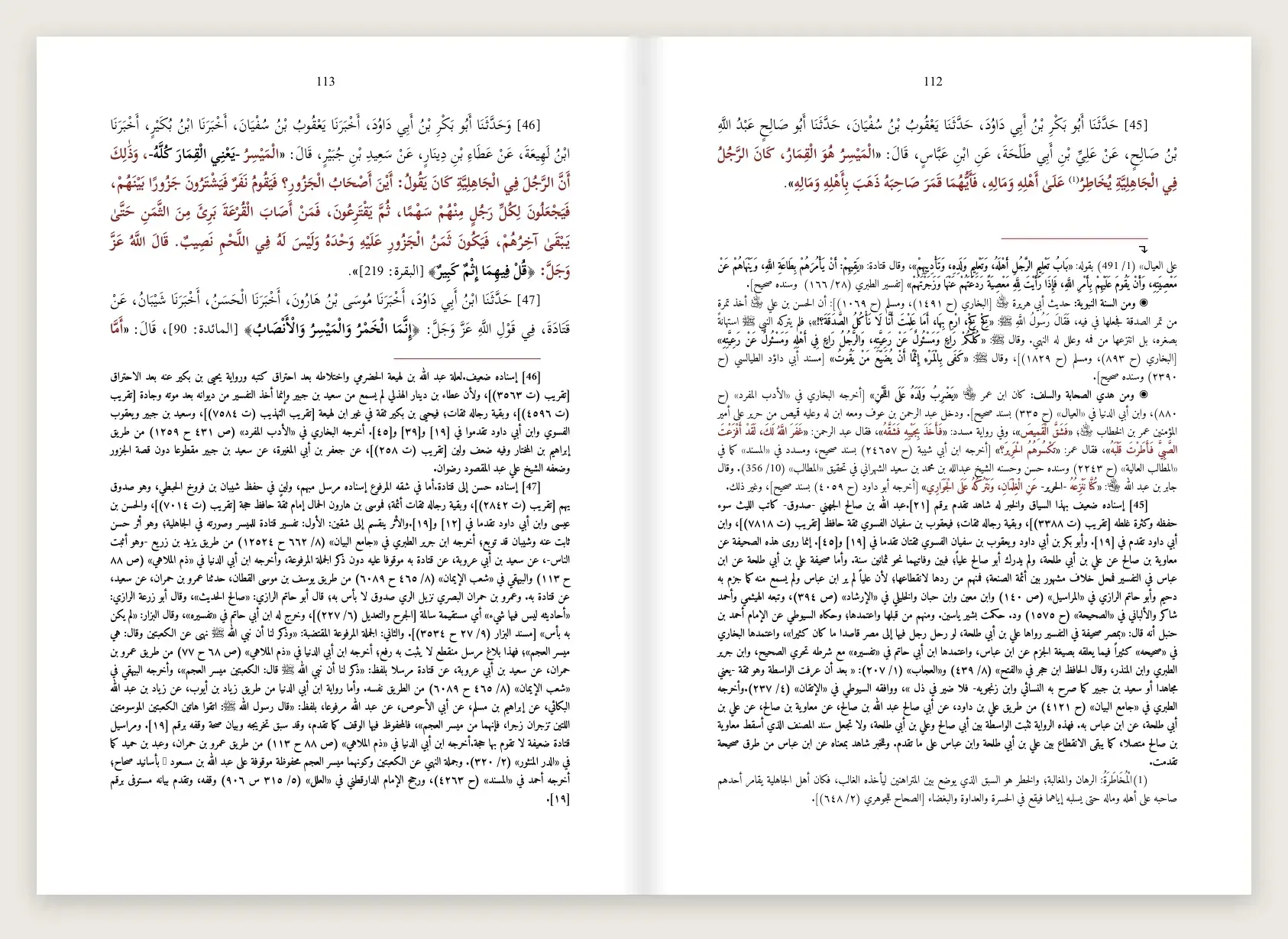
For an edition of a classical text, or any book that relies on reports for its argument, the reader needs to know which reports are sound. A good grading does three things:
- It traces the report to the books that record it with chains of narrators (this is takhrīj).
- It judges the chain itself, narrator by narrator, against the principles of the hadith critics.
- It states the verdict plainly, with the reason, so the reader can check it.
Earlier editors’ gradings are useful leads, but an edition that simply repeats them adds nothing. In our editions the verdict comes first in each note, then the sources.
4. Keep honorifics and names consistent
Decide once how you will write names, honorifics and dates, and apply it to the whole book:
- one spelling for each name and term, with or without diacritics, used everywhere;
- honorifics after the Prophet ﷺ, the Companions and the scholars, in the same form each time;
- a scholar’s death date at their first mention, for example al-Khaṭīb al-Baghdādī (d. 463 AH).
A short style sheet of these choices, kept beside the manuscript, saves hours of corrections later.
5. Choose typefaces for each script
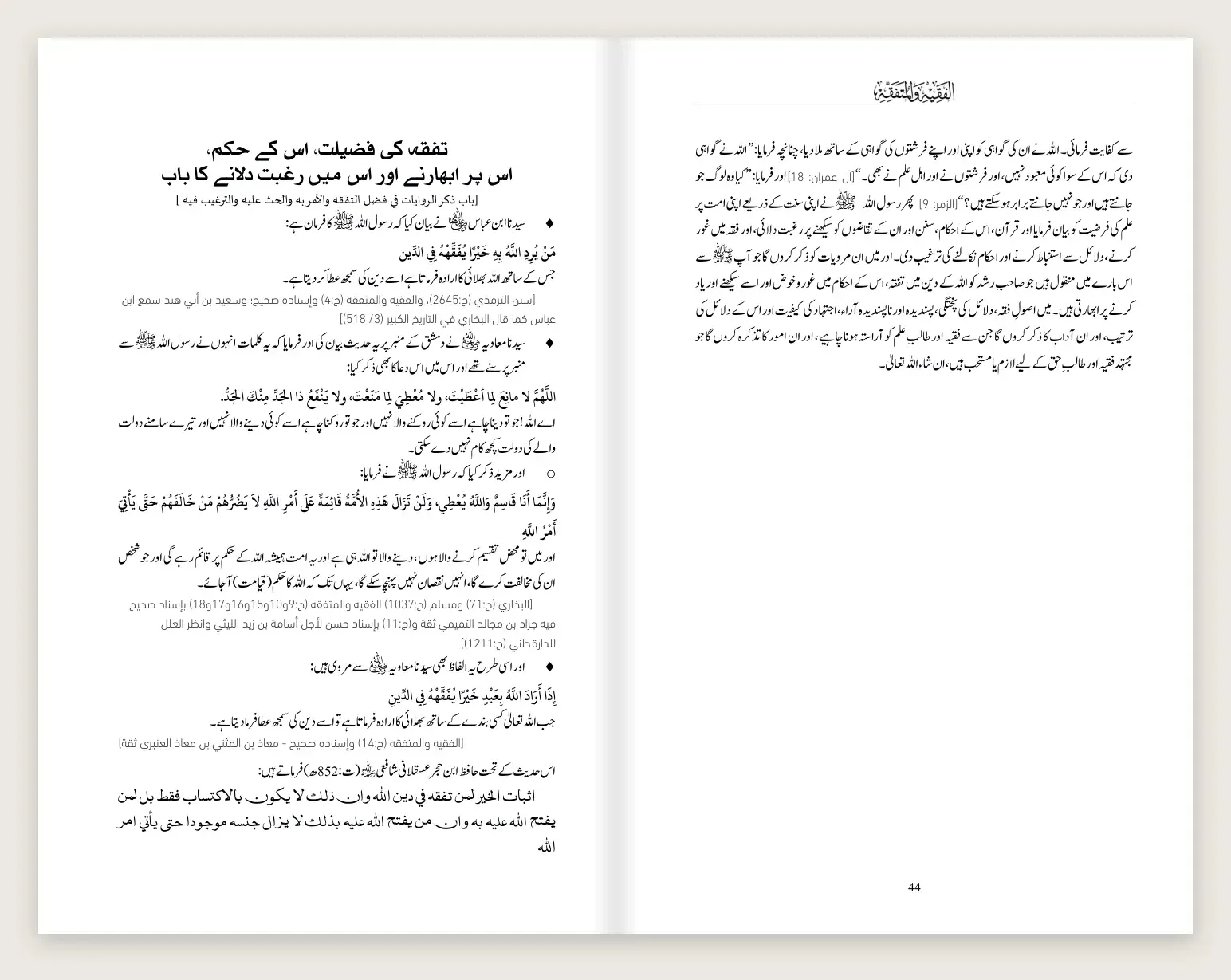
Arabic, Urdu and English need different typefaces, and the Qur’an often needs its own. What matters most:
- The Qur’an in a typeface made for Mushaf text, so every mark displays correctly.
- Hadith and other Arabic in a clear naskh with full vowel support.
- Urdu in Nastaʿlīq, the script Urdu readers expect, rather than an Arabic naskh that changes the letter shapes.
- English in a book typeface with the special letters transliteration needs, such as ā, ī, ū, ḥ and ʿ.
Check the line spacing on pages with vowelled Arabic. Fixed spacing that looks fine for English can clip the vowel marks above and below the line.
6. Fix the design on one chapter first
Don’t design the whole book at once. Set one representative chapter as a sample: headings, a verse, a report, a long quotation, footnotes and a page break. Agree on it, then apply the same rules to every chapter. Changes after that point are cheap; changes after the whole book is set are not.
7. Add indexes for books people will study
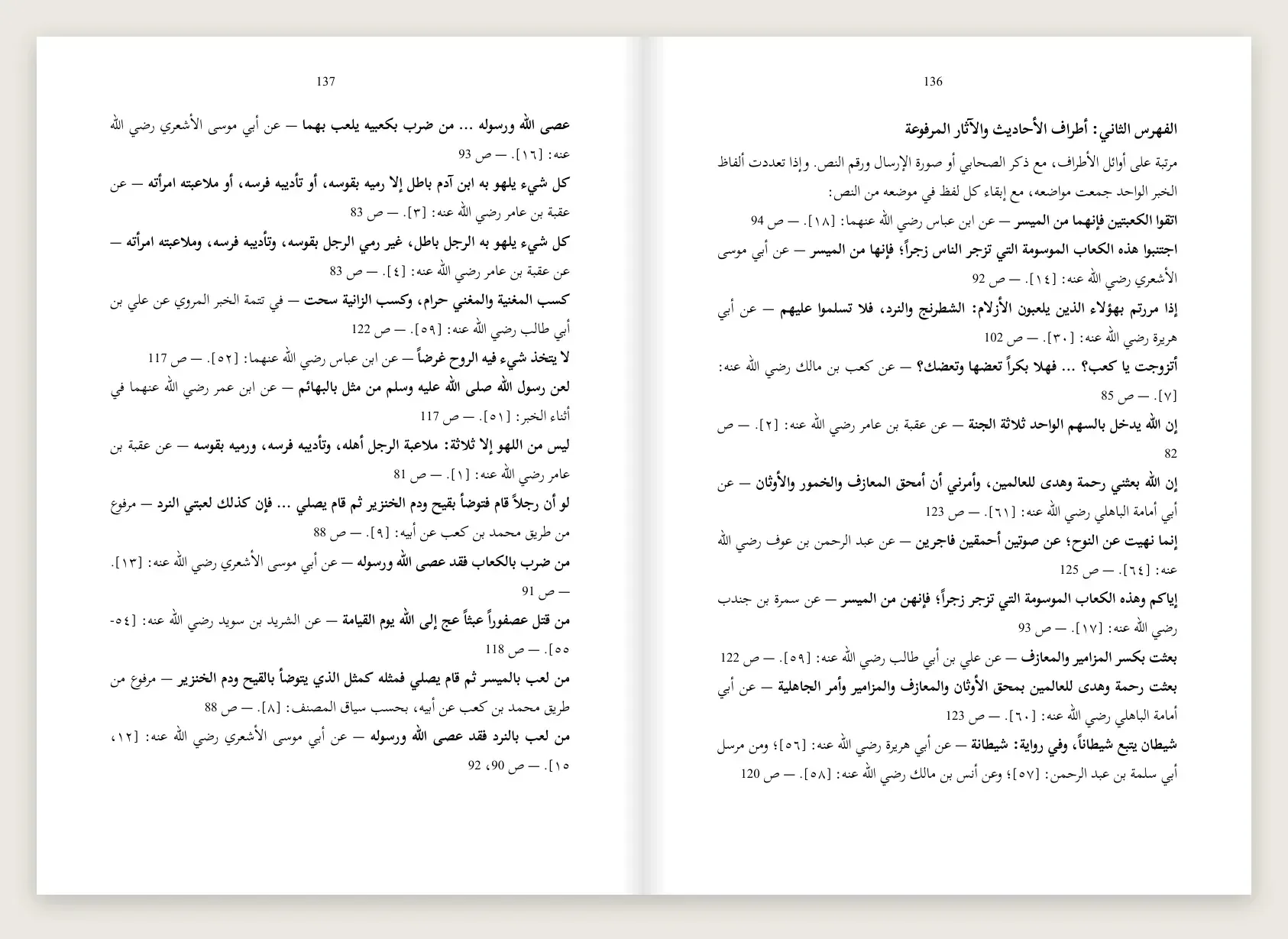
For a book that people will come back to, indexes are the way in. The most useful for Islamic books are indexes of Qur’an verses, hadiths and reports, people, sources, and subjects. They are easiest to build at the end, from the finished text, so the page numbers are final.
8. Hand the printer the right files
Most printers want:
- a print-ready PDF of the inside pages at the exact trim size, with fonts embedded;
- a separate cover file sized for the spine width of your final page count;
- any bleed and colour settings they ask for.
Keep the editable file and the fonts too. For a reprint or a correction you will want to change the book, not rebuild it from a PDF. If you plan an ebook, make a separate PDF set up for screens.
A short checklist
| Before you send the book to print | Done |
|---|---|
| Every Arabic passage taken from a source and logged | ☐ |
| Every reference has a book, volume and page or number | ☐ |
| Gradings stated with reasons | ☐ |
| Names, honorifics and dates follow one style sheet | ☐ |
| Typefaces chosen for each script, vowel marks not clipped | ☐ |
| One sample chapter agreed before the rest | ☐ |
| Indexes built from the final pages | ☐ |
| Print PDF, cover file, ebook PDF and editable file ready | ☐ |
If you would like help with any of these steps, see how we work on books and publishing, or look at examples such as the Urdu edition of al-Faqīh wal-Mutafaqqih and the Arabic edition of Taḥrīm al-Nard.