Urdu edition: takhrīj, translation and typesetting
Tahdhīb al-Faqīh wal-Mutafaqqih
An Urdu edition of al-Khaṭīb al-Baghdādī’s al-Faqīh wal-Mutafaqqih for the publisher Dār Riwāq al-Turāth: every report checked and graded, translated, and typeset as a print-ready book.
- What we did
- Takhrīj and taḥqīq · Urdu translation · Book design and typesetting · Cover design
- Sector
- Islamic publishing
- Where
- Lahore, Pakistan
- Editor and translator
- Abu Bakar bin Yasir Gondal
- Publisher
- Dār Riwāq al-Turāth
- Publisher’s note
- Abu Bakar bin Yasir Gondal and Abū al-Ḥasan Muzammil al-Balūshī
- Type
- Client project
- Status
- In progress
Who it’s for
Urdu-reading students of knowledge who want al-Khaṭīb’s classic on learning and fiqh in their own language, with each report’s authenticity stated plainly, and the publisher, Dār Riwāq al-Turāth.
The problem
Al-Khaṭīb al-Baghdādī (d. 463 AH) gathered hundreds of reports on the virtue of fiqh and the manners of the jurist and the student. A faithful Urdu edition has to keep his order and his own words, check every chain rather than copy an earlier editor’s verdict, and still read as one clear book.
What was built
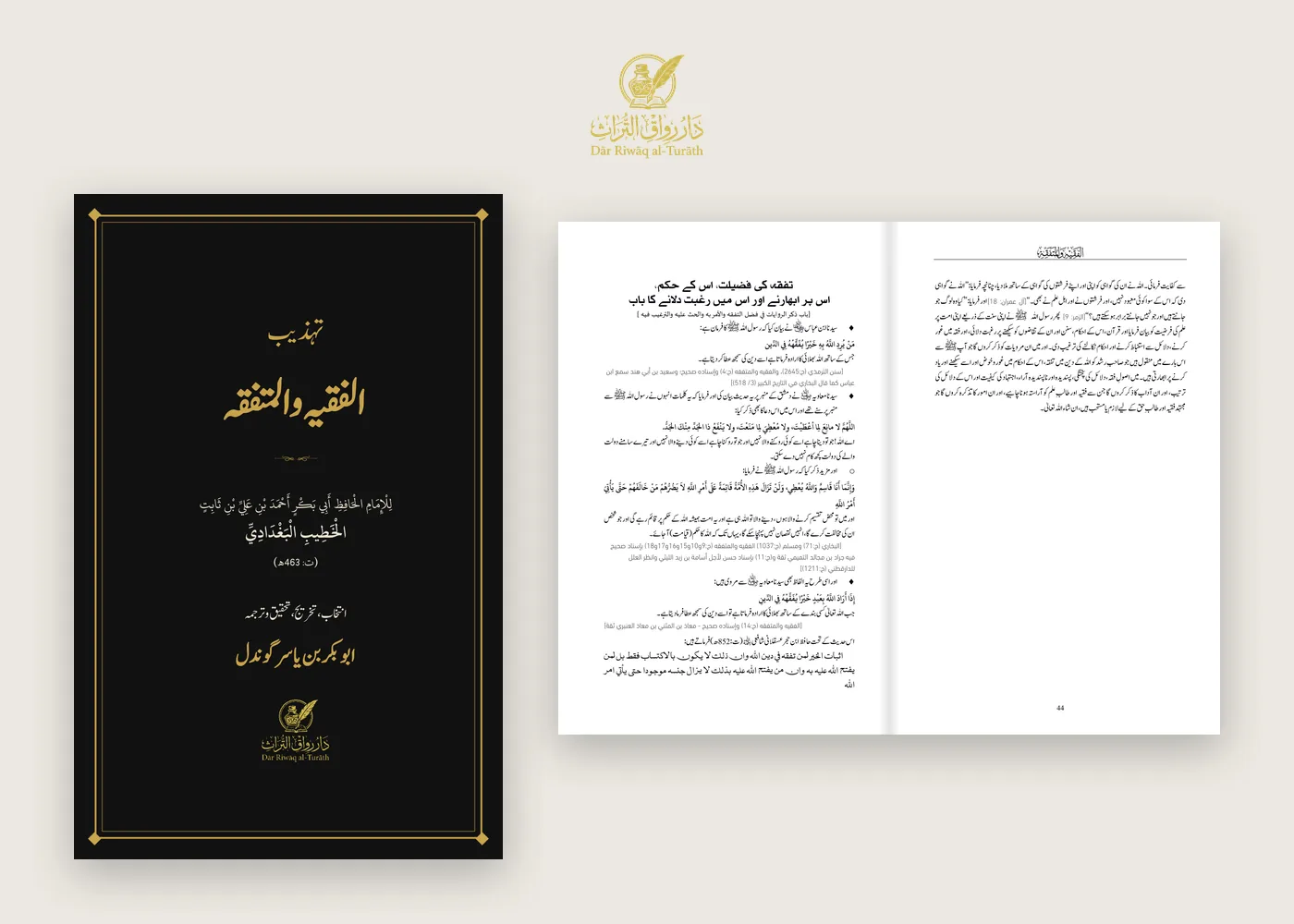
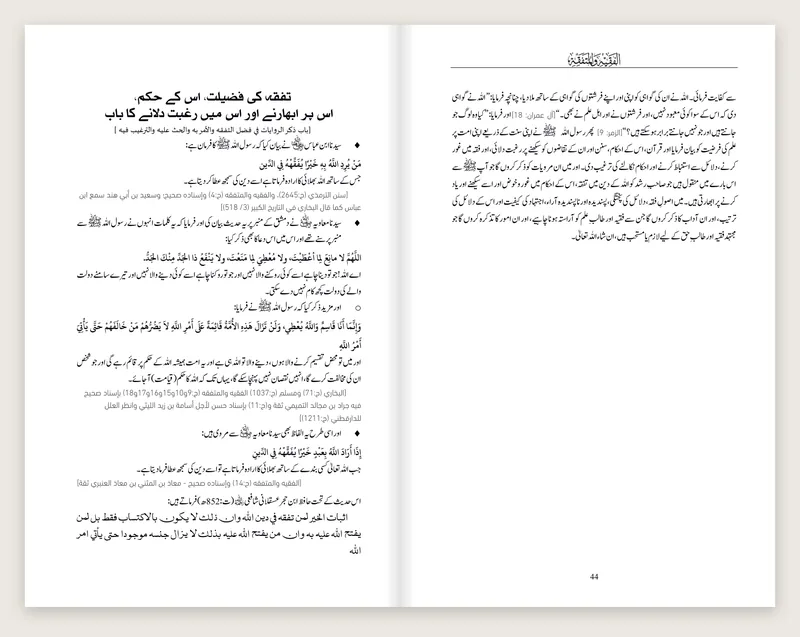
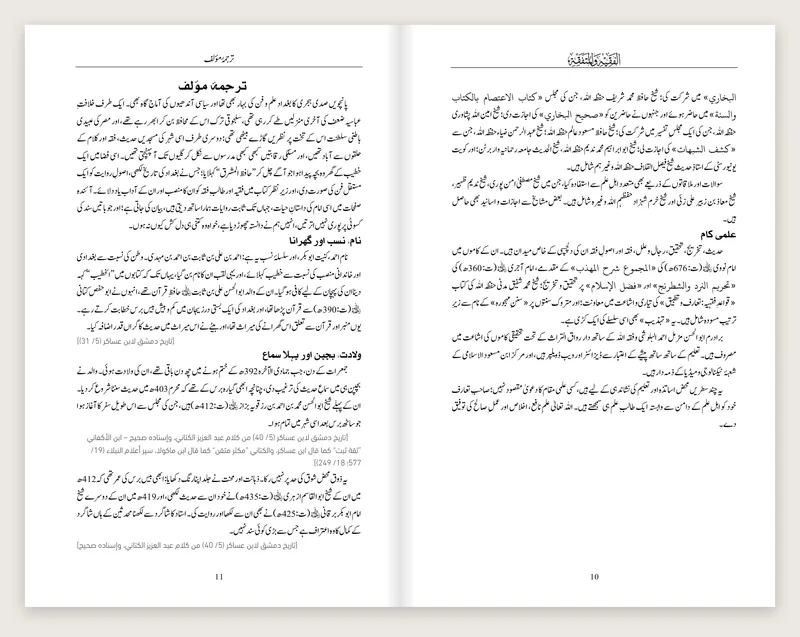
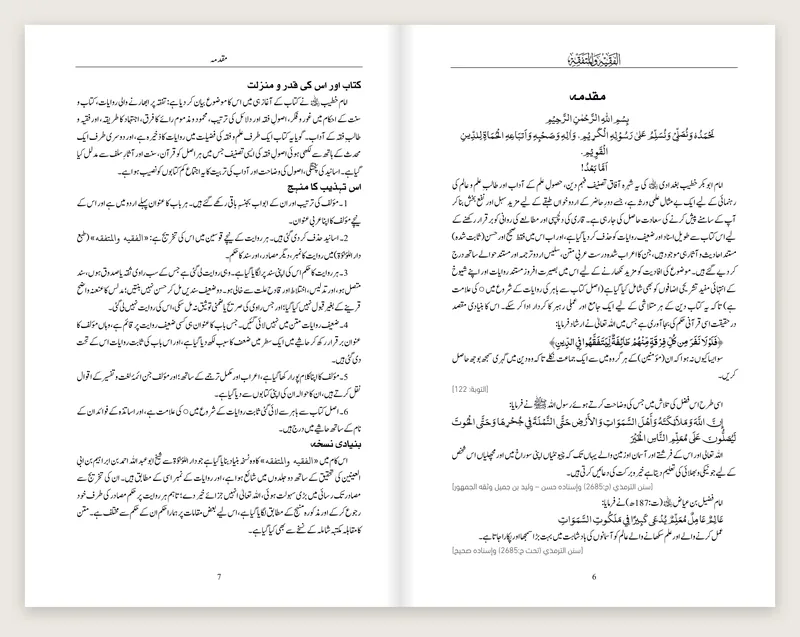
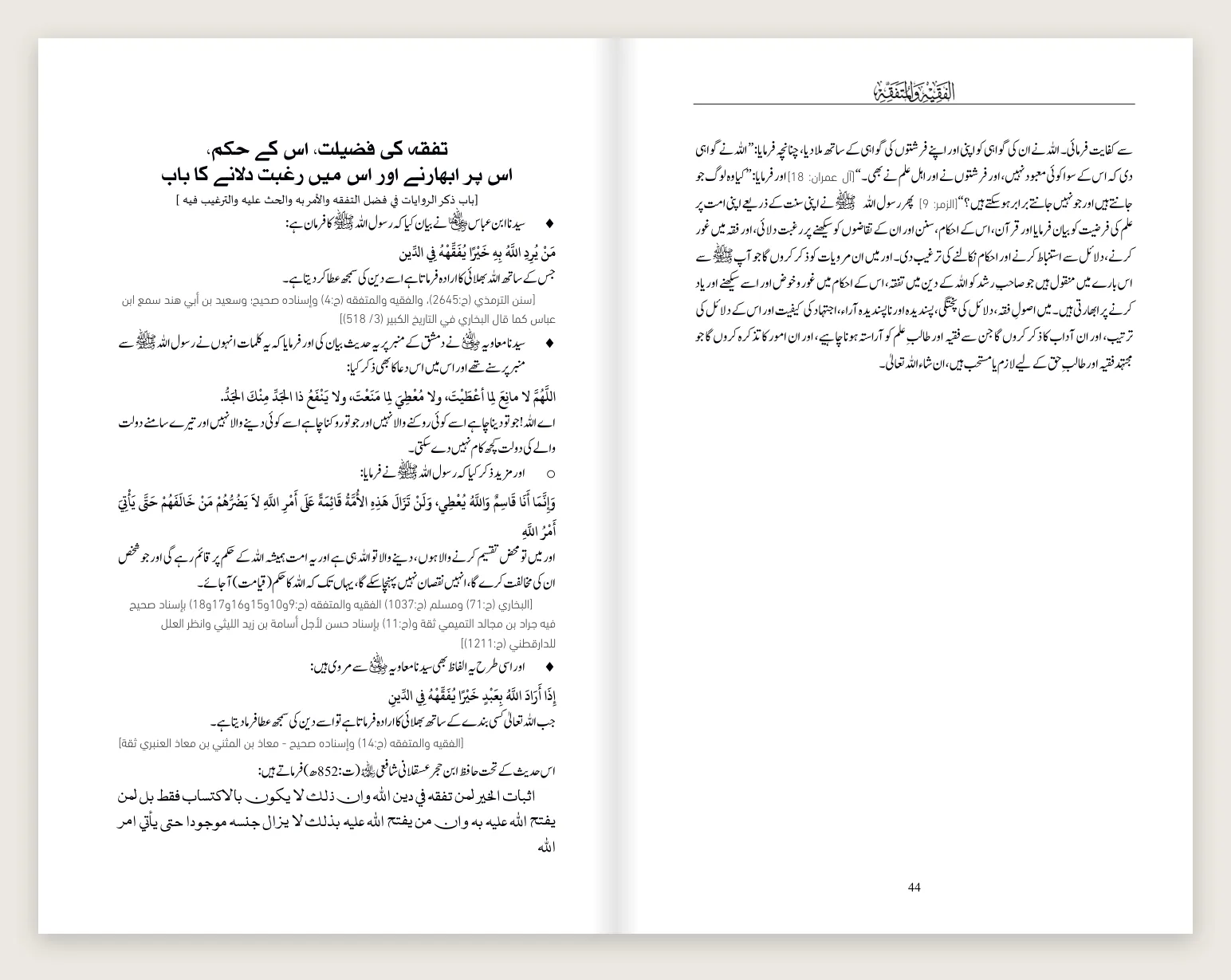
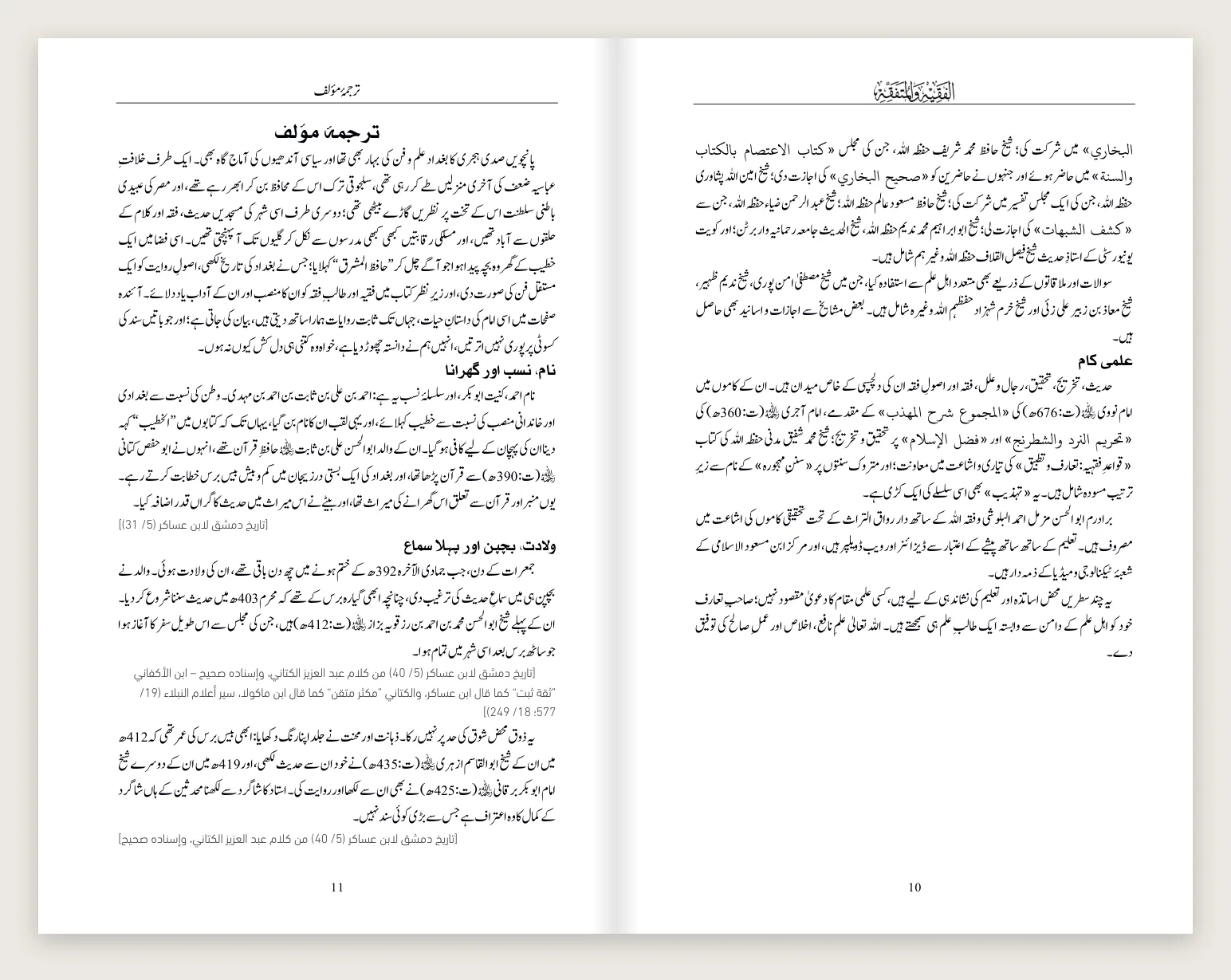
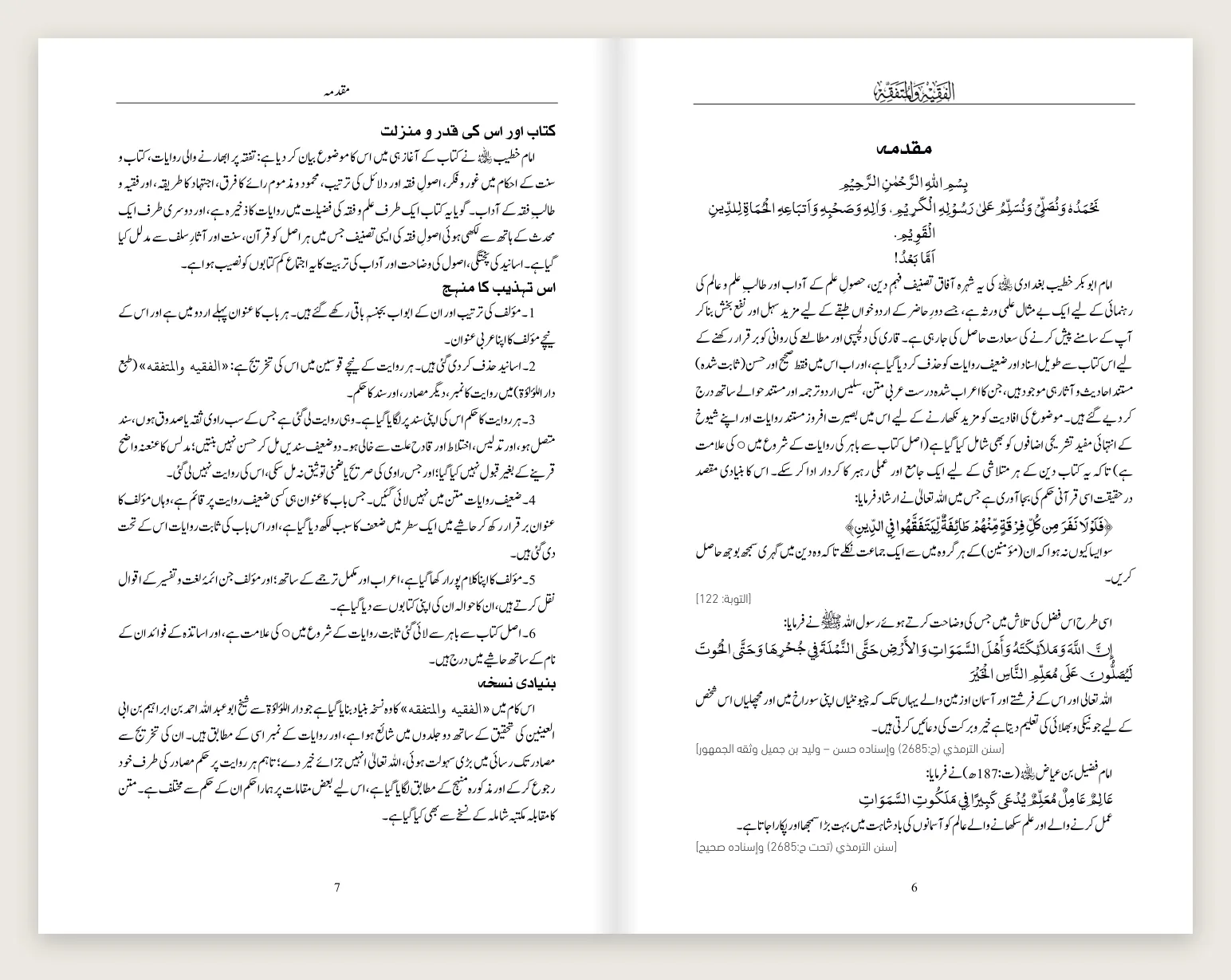
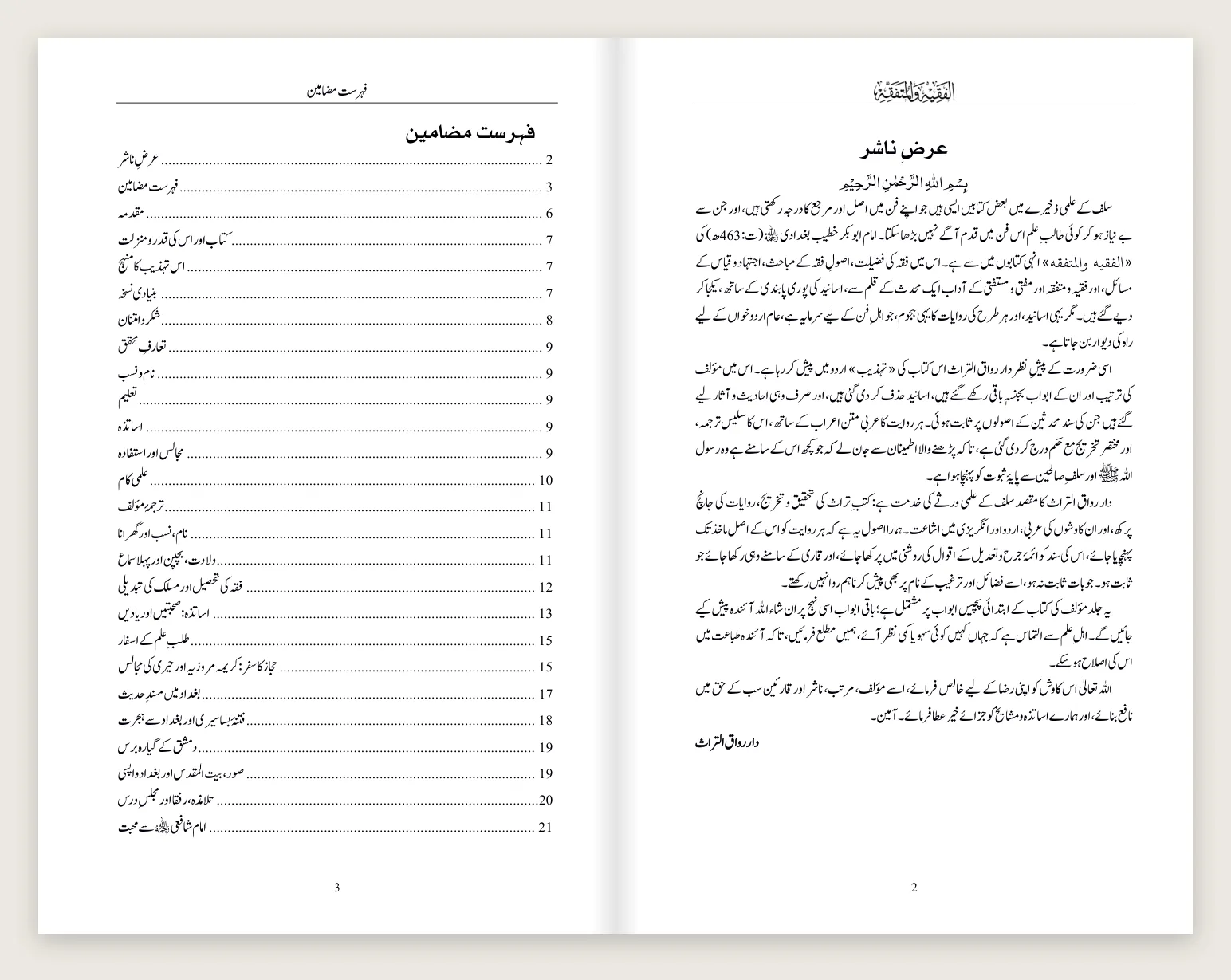
An Urdu tahdhīb, an edited and selected edition, in al-Khaṭīb’s own order. Each report has its Arabic text, an Urdu translation and a short takhrīj line with its grading. Al-Khaṭīb’s own prose is kept in full with a translation, and weak reports are named under their chapter heading with a one-line note. The front matter includes the publisher’s note, an introduction on the method and the edition, a note on the editor, and a biography of al-Khaṭīb written from the earliest sources.
- Every report checked against the printed edition and the full text, then graded afresh
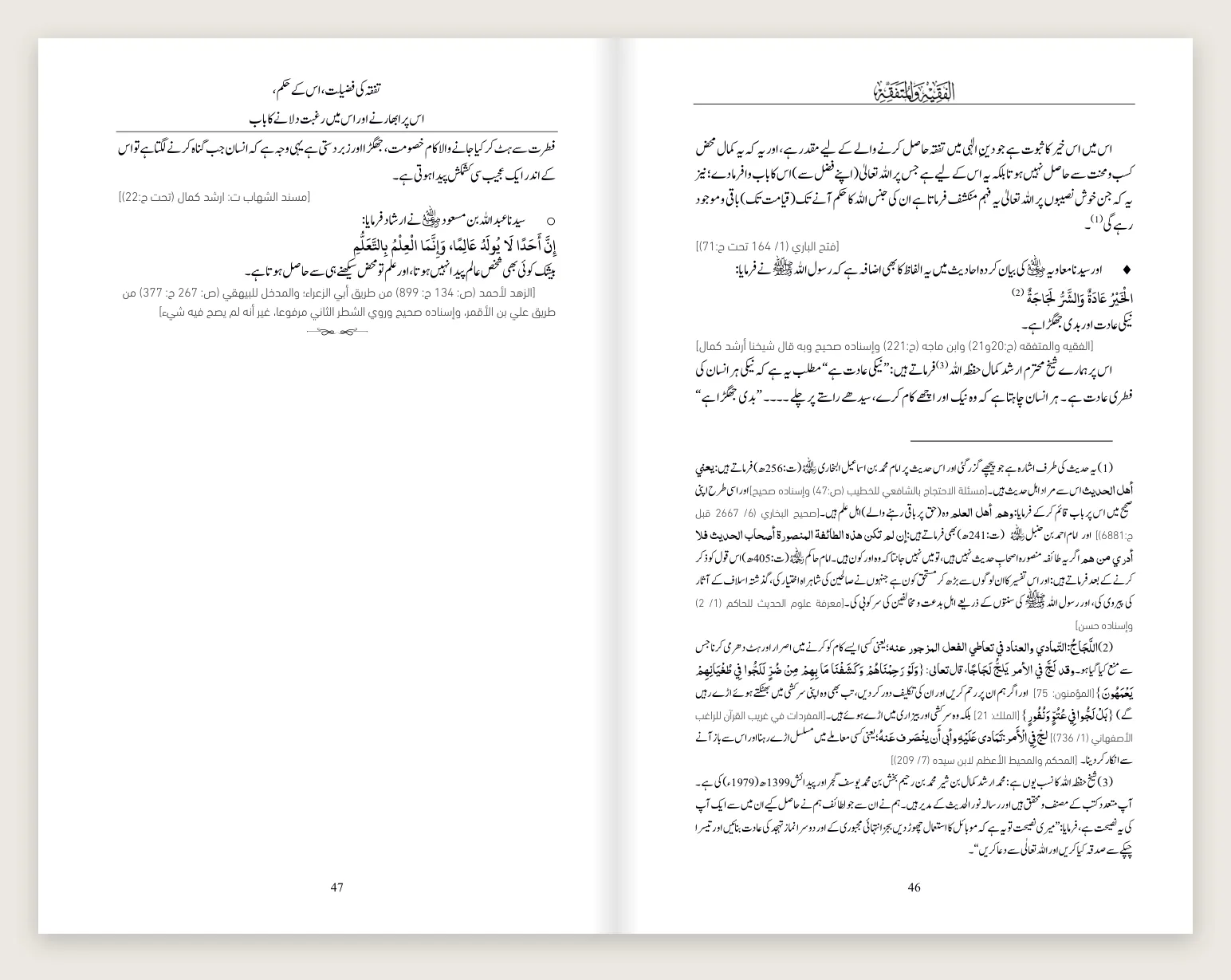
- Arabic text, Urdu translation and a short takhrīj line for each report
- Al-Khaṭīb’s own words kept in full, with translation
- A biography of al-Khaṭīb from the earliest sources, with references
- A 14.5 × 22.5 cm book layout with mirrored margins and running heads
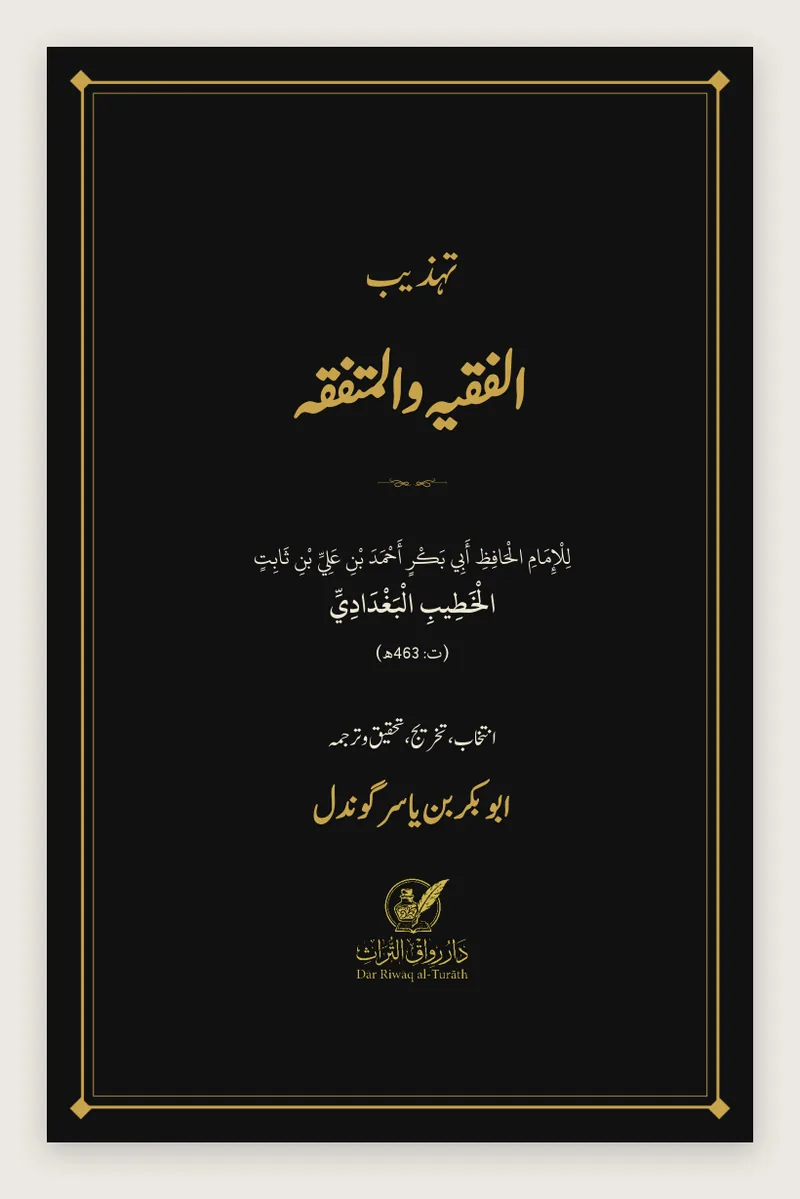
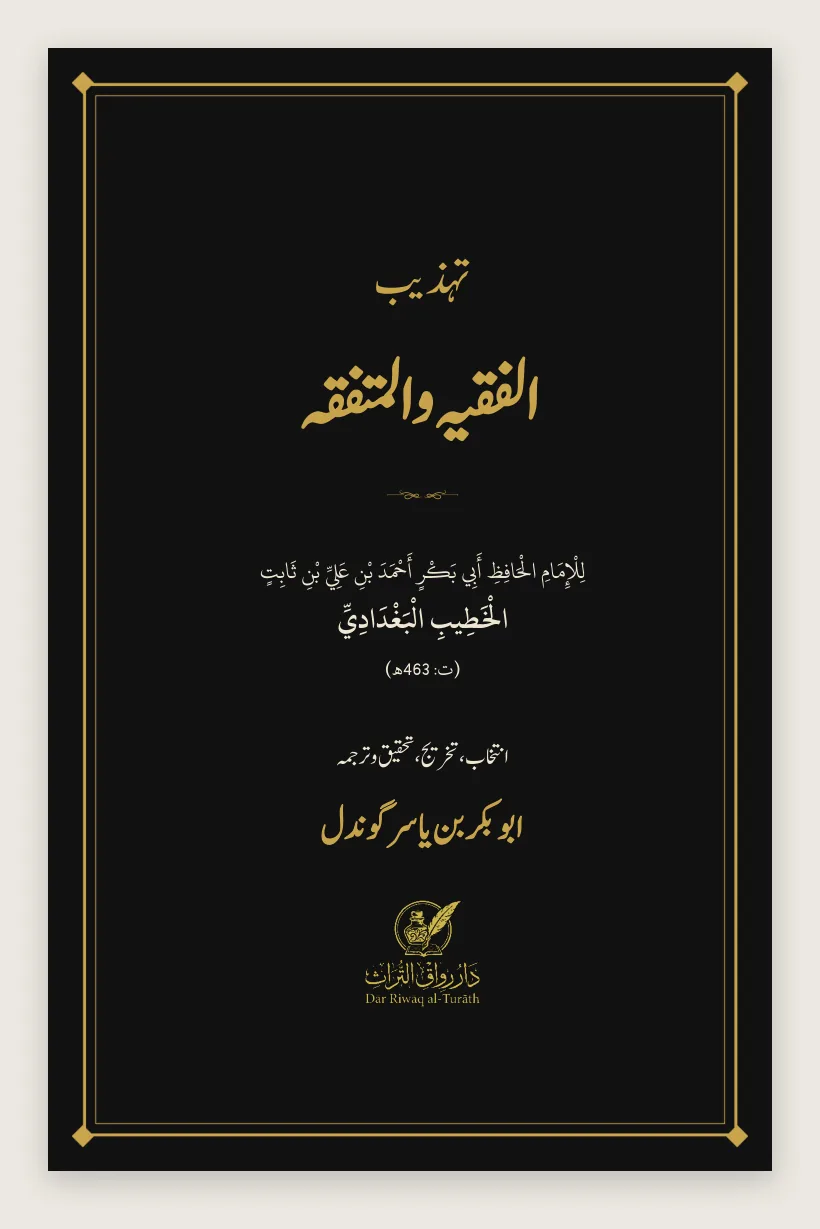
- A black and gold cover, and Word styles named in Urdu so the publisher can keep editing
Process
From brief to handover
How the work moved, step by step.
Sources gathered
The printed basis edition, the full text of the book and the classical biographical works, set side by side.
Every report judged
Each chain checked from the sources and graded afresh; the earlier edition’s verdicts used as leads only.
Translation
Al-Khaṭīb’s reports and his own prose translated into plain classical Urdu, with honorifics and death dates at first mention.
 (opens a larger view)
Front matter
Publisher’s note, introduction, a note on the editor and a biography of al-Khaṭīb from the earliest sources.
 (opens a larger view)
Typesetting
Book size, margins, running heads, footnotes and Urdu-named styles, then a numbered draft for review each round.
 (opens a larger view)
Cover
A black and gold cover carrying the publisher’s mark.
 (opens a larger view)
Design notes
How the edition is made
The basis edition
The work starts from the Dār al-Lu’lu’ah edition, edited by Aḥmad ibn Ibrāhīm Abū al-ʿAynayn, read against the full text of al-Khaṭīb’s book. The earlier editor’s gradings are used as leads only: every chain is judged again.
One line per report
Each report carries a short bracket after it: where it is found, and a plain verdict on its chain, such as وإسناده صحيح. Longer discussions go to a separate research file, so the book stays readable.
Weak reports, handled openly
Where al-Khaṭīb titles a chapter with a weak report, the heading stays, a one-line note says why the report is weak, and the sound reports on the subject follow under it.
A partnership
The publisher’s note is signed by the editor and by Abū al-Ḥasan Muzammil al-Balūshī of Dār Riwāq al-Turāth, a student of Shaykh Ḥabīb al-Raḥmān Hazārvī who writes on hadith and ʿaqīdah at salafiri.com.
The work
The book
The cover and pages from the current draft, shown as they print. Urdu reads right to left, so each spread opens from the right.
The work
The publisher
Dār Riwāq al-Turāth publishes classical texts with checked references. The logo’s vowel mark was corrected (a kasrah under the first rā’ of رِواق) for the cover and spine.

Handover
What the client received
Each draft goes to the publisher as files they can print or keep editing.
- Word fileThe full book with named styles, footnotes and running heads
- PDFA print-ready PDF of the current draft
- Research fileLonger notes on disputed reports, kept apart from the book
- CoverThe cover artwork with the publisher’s mark
Tahdhīb al-Faqīh wal-Mutafaqqih and its logo, artwork and content belong to the client. Shown here as an example of our work.
Start here
Need something
like this?
Tell us about your project and mention Tahdhīb al-Faqīh wal-Mutafaqqih. We’ll explain how we’d approach yours and what it would cost.
- A reply from a real person
- Written quote before work starts
- You own everything at handover