Preparing an Arabic or Urdu Islamic book for print: Qur’an text, harakat and indexes
For Islamic books in Arabic and Urdu: Qur’an script, vowel marks, honorifics, chains of narration, footnotes, indexes, and how reports can be checked.
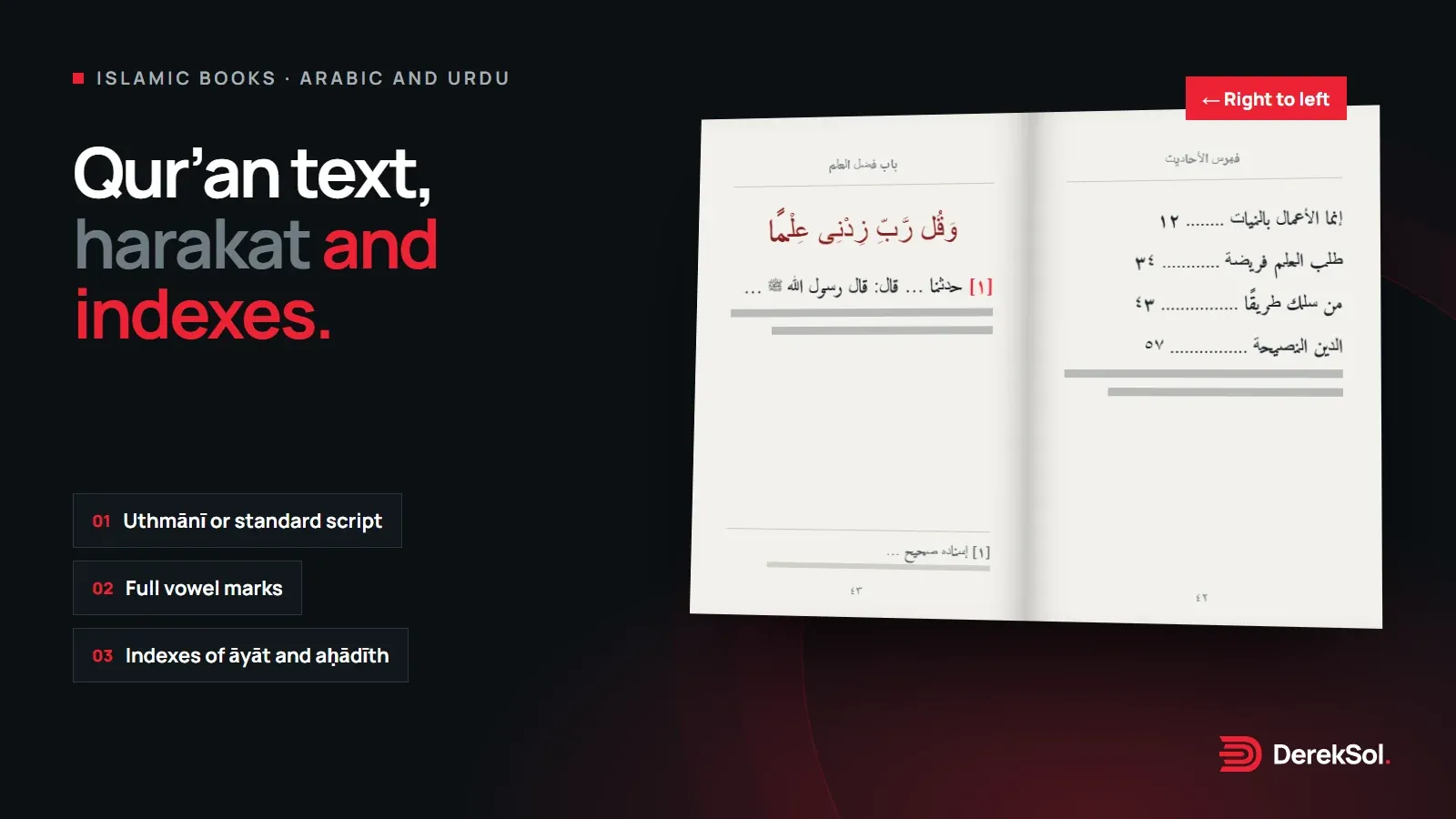
Islamic books in Arabic and Urdu bring together the right-to-left work covered in Preparing an Arabic or Urdu book and a set of conventions of their own: the Qur’an text, vowel marks, honorifics, chains of narration and indexes. Publishers handle these in different ways, and many of the differences are matters of house style rather than right and wrong. This guide sets out the usual options and how we approach them.
Which script for the Qur’an
Verses can be printed in the Uthmānī script used in the Mushaf, or in standard modern spelling. Both are found in respected books. The Uthmānī script keeps the spelling of the Mushaf exactly; standard spelling is easier to read inside running text.
| Uthmānī script (Mushaf) | Standard spelling |
|---|---|
| وَقُل رَّبِّ زِدْنِى عِلْمًا | وَقُل رَّبِّ زِدْنِي عِلْمًا |
Ṭā Hā 20:114, the same words in both scripts. Notice the final letter of زدنى: the Mushaf spelling writes it without dots.
Whichever you choose:
- copy, don’t retype: take each verse from a reliable digital Mushaf text, so no letter or mark is lost;
- use a font made for it: the Uthmānī script needs a typeface designed for Mushaf text, because ordinary Arabic fonts can drop or misplace its special marks;
- mark verses clearly: with ornamental brackets ﴿ ﴾ and a reference such as [طه: ١١٤].
Vowel marks
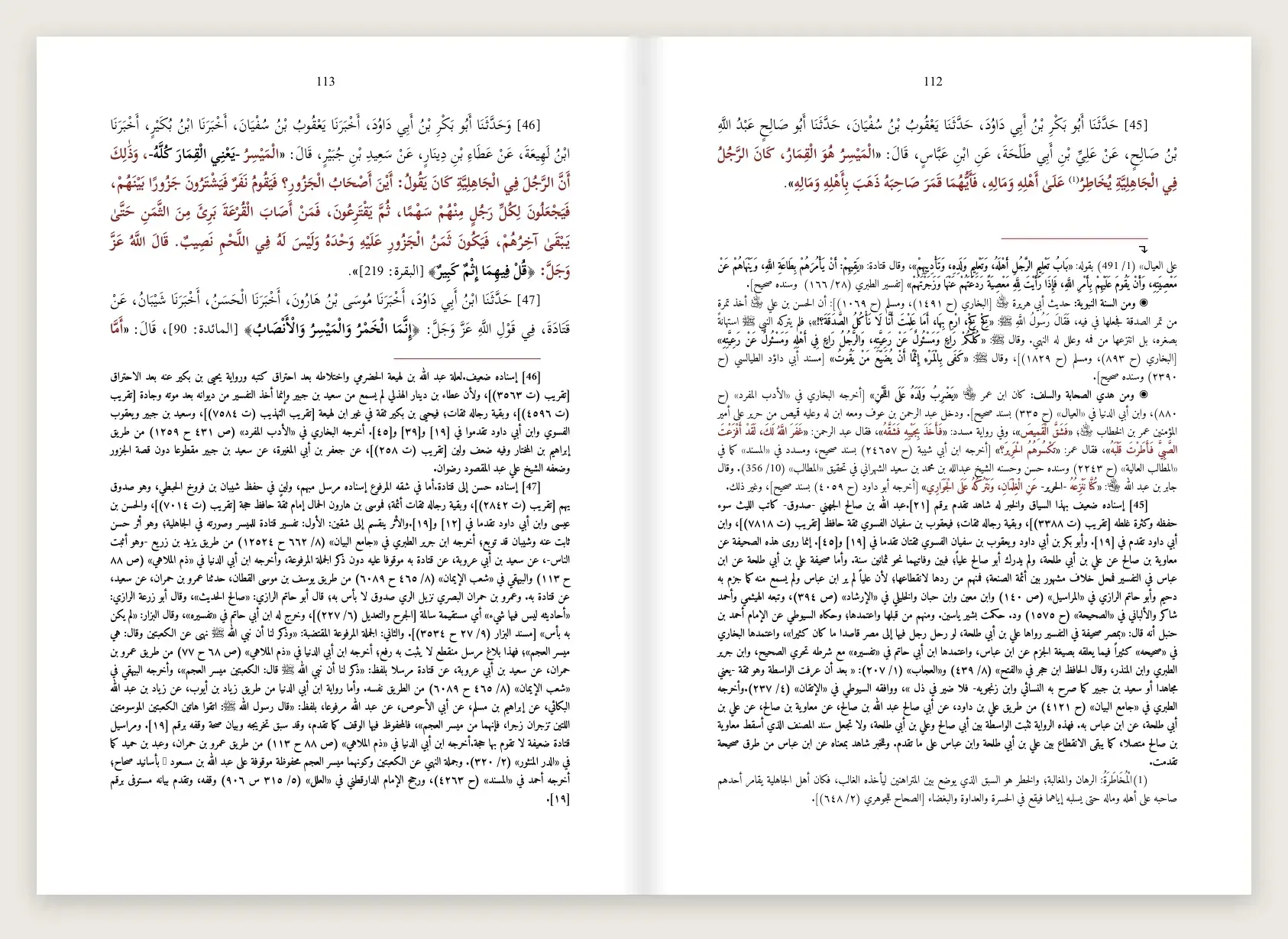
How much to vowel the text is a decision for each book:
| Approach | Often used for |
|---|---|
| Full vowel marks on Qur’an and hadith, none on the rest | Most study books |
| Vowel marks only where a word could be misread | Books for advanced readers |
| Full vowel marks throughout | Books for learners and children |
Vowel marks are where printing most often goes wrong. Leave enough line spacing that marks above and below the line are not clipped, and check them in the final PDF at full size: a misplaced shadda or a missing tanwīn can change a word.
Honorifics and names
After the Prophet’s name, the Companions and the scholars, honorifics can be written out in full, such as «صلى الله عليه وسلم», «رضي الله عنه» and «رحمه الله», or set as single symbols such as ﷺ. Unicode now includes symbols for several of these phrases, but many fonts do not contain them yet.
- Written out works in every font and is easy to search.
- Symbols save space, but choose a typeface that includes every symbol you use, and check them in the PDF, because a missing symbol shows as an empty box.
Many books also add a scholar’s death date at the first mention, for example الخطيب البغدادي (ت ٤٦٣هـ), which helps readers place each name in time.
Reports and their chains
Hadith books set the chain of narration (isnād) and the text (matn) in different ways. Common choices include:
- the whole report in one paragraph, with the Prophet’s words in bold or in a second colour;
- the chain in a lighter weight and the text in the regular weight;
- each report numbered, so it can be cited and indexed.
Footnotes carry the references. Decide on one order and one format for them, for example the book, then the volume and page or the hadith number, so every note reads the same way.
Indexes
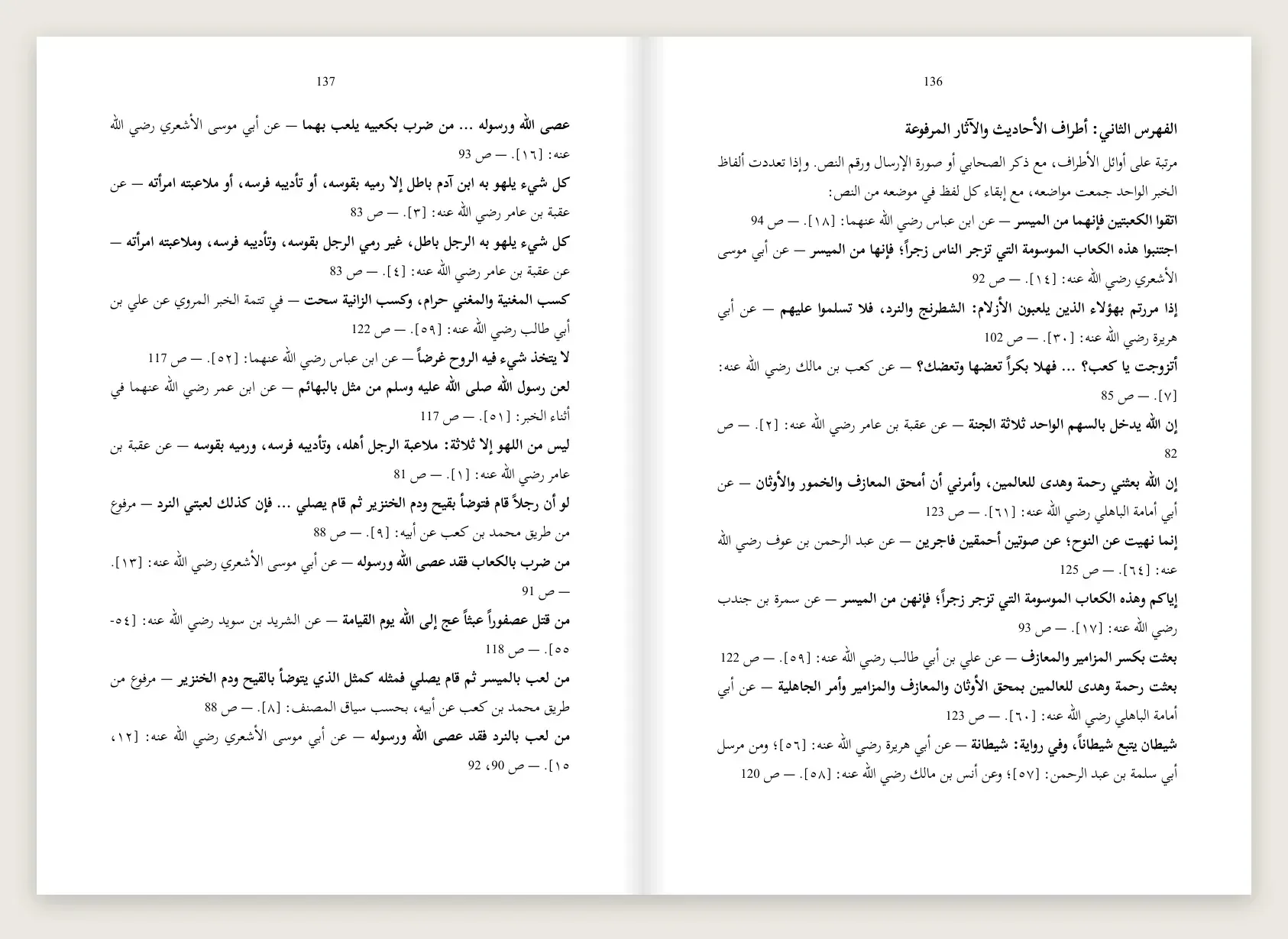
For a book people will study and return to, indexes are how readers find their way in. The ones used most often are:
| Index | In Arabic |
|---|---|
| Qur’an verses | فهرس الآيات |
| Hadiths, by their opening words | فهرس الأحاديث |
| Reports of the Companions and later generations | فهرس الآثار |
| People | فهرس الأعلام |
| Sources | فهرس المصادر |
| Subjects | فهرس الموضوعات |
Build them from the final pages, once nothing will move, so the page numbers are right.
An optional extra: takhrīj and taḥqīq
Some authors and publishers want more than layout. Takhrīj traces each report to the books that record it with their chains, and states its grading. Taḥqīq goes further for a classical text: establishing the text from its sources, explaining people and places, and adding a study of the author. Many books are published perfectly well without either; it depends on the book and its readers.
When authors ask us for this work, it is carried out by our founder, Abu Bakar bin Yasir Gondal, in his own editions as well as for others. One approach he uses is to number each report and let the number carry its note, with the verdict first and the sources after it, for example:
[١] حديث حسن. أخرجه …
“[1] A sound (ḥasan) hadith. Recorded by …”
Every judgement is made from the sources against the principles of the hadith scholars, and anything uncertain goes back to the author or editor as a written note. The book remains theirs; his part is to give them the evidence to decide.
| Before you send the book to print | Done |
|---|---|
| One script for the Qur’an, copied from a reliable Mushaf text | ☐ |
| Vowel-mark approach decided and checked in the PDF | ☐ |
| Honorifics in one form, in a typeface that contains them | ☐ |
| One format for reports, chains and footnote references | ☐ |
| Indexes built from the final pages | ☐ |
| Right-to-left checks done: page order, digits, fonts embedded | ☐ |
More in this series: Preparing a book for print · Preparing an Islamic book in English · Preparing an Arabic or Urdu book